Signed in as:
filler@godaddy.com
You have studied these forms in the studio. Now study them where they live.
For the African Diasporic artist, there is a difference between learning the steps and standing in the ground they came from.
This is not a performance tour and it is not a vacation. It is a training intensive:
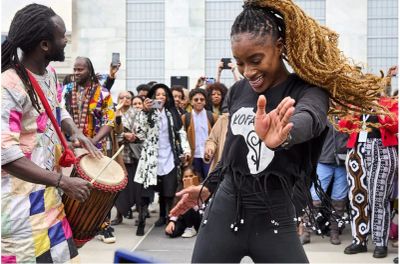
fourteen days of daily study in sabar, djembe, and the traditional dance and drum forms of Senegal, taught by master artists in the country that shaped them.
You will train hard. You will be challenged. And you will return to your own work with something you cannot get from a video or a weekend workshop: the rhythm, the context, and the cultural knowledge carried in the body of the tradition itself.
If you are serious about this work, this is where it deepens.

Sabar.The virtuosic Wolof dance and drum tradition of Senegal, known for its explosive energy, fast footwork, elevation, and the electric call-and-response between drummer and dancer. You will work directly with the rhythms and the movement vocabulary, learning the bàkk (the composed rhythmic phrases) and the improvisational conversation at the heart of the form.
Drum and dance as one language.Dancers will train their ear as well as their body, and drummers will deepen their understanding of how rhythm drives movement. In this tradition, the drum and the dance are inseparable, and you will study them as the single conversation they are.
Traditional forms and their context.Beyond technique, you will learn the names, meanings, and origins of the forms, the cultural and spiritual context that gives the movement its purpose. This is the knowledge that turns choreography into understanding.
Repertoire you can carry.You will leave with material, vocabulary, and a deeper well to draw from in your own teaching, choreography, and performance.

For artists working in African and African Diasporic dance, training at the source is not a luxury. It is part of the lineage.
Senegal is one of the great living centers of West African dance and drum. To train here is to connect your practice to an unbroken tradition, to learn from the artists who carry it, and to understand the forms not as steps to be executed but as culture to be embodied. It deepens your technique, yes. It also deepens your authority as an artist and an educator.
This is the work the Kofago Institute exists to do: to connect artists and communities to the living traditions of the African Diaspora, at their source.
This intensive is built for:
On experience level: This is a serious training environment, and the pace is demanding. It welcomes committed artists across a range of levels, from dedicated students to working professionals. You do not need to be an expert in Senegalese forms. You do need to come ready to work.

Cohort spaces are limited and held on a first-come basis.
Button: Reserve Your Place →